15 June 2011

HIA'11 Conference in Granada: Final Report

After doing a great job with the conference Ana Rivadeneyra and the other organisers have released a very thorough report on the HIA'11 Conference in Granada:
Please find attached the final report of the HIA’11 conference held in April in Granada.

For those of you who could not attend, I take the opportunity to remind you that all videos from plenary sessions are available in original/dubbed version at the EASP live stream webpage together with the Powerpoint presentations and the book of abstracts, among other conference materials.

Great work!

13 June 2011

3 Way Street: ducking and diving on 'Main Street'

http://vimeo.com/24572222

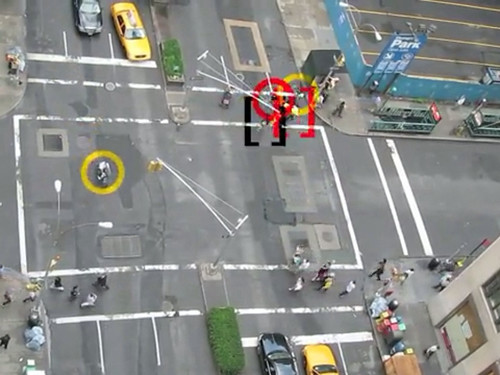
This is a breath-taking MSc thesis video showing the intertwined and interconnected nature of danger and safety on a typical New York junction (read pretty much any major urban centre around the world).

Simply amazing both for what it shows and as a work of art in it's own right.

[Ron Gabriel via Kottke via Gizmodo]

11 June 2011

HIA of the Americas Conference Workshop 17-18th Oct' 2011

The 3rd HIA of the Americas Conference Workshop will be held on October 17th-18th at the California Endowment in Oakland, CA.

It is a two-day workshop that aims to provide leadership to HIA practitioners by offering a forum for HIA practitioners to network, contribute to progress in the field, and share strategies to elevate the practice of HIA. The workshop will also promote excellence in HIA by sharing best practices, discussing issues and challenges, and disseminating newly revised practice standards and guidance.

It is intended for current practitioners of Health Impact Assessment in North, Central or South America and the content will therefore be focused on HIA practice in the Americas.

Registration is limited to 120 participants, and will be taken on a first-come, first-served basis. Participation will be limited to no more than 3 individuals per organisation. Non-Americas participants are welcome.

For more information and to register, click here.

Based on your responses to the registration questions, a member of the planning committee may contact you to discuss your participation.

The deadline to register is Monday, August 8, 2011.

If you have additional questions, you can contact the organisers directly at registration@humanimpact.org.

8 June 2011

References to HIA in Technical Report to the WCSDOH

The WHO has released a draft technical paper for the World Conference on Social Determinants of Health (WCSDOH). It includes some quite limited references to HIA:

Assessing the health and equity impacts of different policy options

If reducing health equities is identified as a high level priority across policy-making, there is the possibility to make use of a range of tools to consider equity impacts of policies of various sectors. Two key approaches are the use of health impact assessment and health equity assessment tools. Gender mainstreaming and human rights situation analysis tools can also contribute.

Health impact assessment draws from the methodologies developed for environmental impact assessment, also now being used for poverty and social impact assessments. Not all health impact assessment methodologies, however, focus on health inequities. Equity-focused health impact assessment is a structured process for assessing the potential health equity impacts of a proposal (positive and negative, intended and unintended) and making recommendations for improving the proposal.

Take a look. I think it underplays the importance of HIA's role and doesn't recognise its status as a more widespread field of practice than some of the other interventions advanced.

The People's Health Movement has a response you may want to endorse.

6 June 2011

What's new on the HIA Gateway?

Reports:
Social Prescribing Hub: MWIA (North Tyneside)
http://www.apho.org.uk/resource/item.aspx?RID=104754

Asian Mental Health Support Service (Khushi): MWIA
http://www.apho.org.uk/resource/item.aspx?RID=104750

Guides:
Guide to HIA: California
http://www.apho.org.uk/resource/item.aspx?RID=104502

Evaluation:
MWIA National Capacity Building programme: outcomes
http://www.apho.org.uk/resource/item.aspx?RID=104503

Tools:
Health costs of cold dwellings.
http://www.apho.org.uk/resource/item.aspx?RID=104501

Natural Heritage: a pathway to health (IRH)
http://www.apho.org.uk/resource/item.aspx?RID=104499

Current Use:
e-HIA News: May Round 2011
http://www.apho.org.uk/resource/item.aspx?RID=104836

MWIA National Capacity Building programme: outcomes
http://www.apho.org.uk/resource/item.aspx?RID=104503

Training Courses:
HIA 3 Day Training Course, 26th-29th September, Wales
http://www.apho.org.uk/resource/item.aspx?RID=104851

2011 HIA of the Americas Workshop 17-18th October, 2011,California
http://www.apho.org.uk/resource/item.aspx?RID=104833

HIA for Extractive Industries: 1 day course,30th May 2011, Mexico
http://www.apho.org.uk/resource/item.aspx?RID=104732

HIA Training Course, 14th-18th November 2011, Liverpool
http://www.apho.org.uk/resource/item.aspx?RID=104570

Mental Wellbeing Impact Assessment Training Course, 5th-7th September 2011, London
http://www.apho.org.uk/resource/item.aspx?RID=104559

Events:
2011 HIA of the Americas Workshop 17-18th October, 2011,California
http://www.apho.org.uk/resource/item.aspx?RID=104833

Planning for Healthier Communities, 13th October, London
http://www.apho.org.uk/resource/item.aspx?RID=104811

Health and Housing workshop, 24th June, Birmingham
http://www.apho.org.uk/resource/item.aspx?RID=104724

Future Cities 2011 - International Symposium, 15-16th December, 2011, London
http://www.apho.org.uk/resource/item.aspx?RID=104723

Spatial Planning for Health, 23rd June 2011, Bristol
http://www.apho.org.uk/resource/item.aspx?RID=104584

The HIA Bibliography has been updated from July 2010 to December 2010, and 26 new references on HIA, SEA and MWIA have been added.

24 May 2011

Mental Health Impact Assessment: Advancing HIA practice in the US

Improving the consideration on mental health in health impact assessments has long been discussed as an area of practice that requires more attention. Dr Lynn Todman and Dr Eunha Kim from the Institute on Social Exclusion at the Adler School of Professional Psychology in Chicago have written a guest post on their work on Mental Health Impact Assessment (MHIA).

Historically, HIA practice, in the United States and globally, has been dominated by a focus on the impacts of public decisions on the social determinants of physical health outcomes such as cardiovascular, respiratory and infectious diseases; cancers; and HIV/AIDS. By comparison, the practice has not been as actively employed to assess the impact of public decisions on the social determinants of mental health.

This is despite well-established and documented evidence that social conditions have profound impacts on the incidence of such psychological disorders as anxiety, mood disorders (e.g., depression and bipolar), suicidality, substance (ab)use, and cognitive impairments. The relative de-emphasis of mental health in HIA practice is problematic for, at least, two reasons. The first and most obvious reason is that mental health is a critical element of overall health: “Mental health is an integral part of health; indeed, there is no health without mental health”. Second, mental health is an important mediator by which social conditions impact physical health: for instance, the emotional stress associated with poverty has documented relationships to the incidence of HIV/AIDS and cardiovascular disease. Therefore, minimizing or overlooking mental health considerations in HIA practice yields an incomplete understanding of the factors that shape health outcomes, and limits capacity for effective prevention and wellness promotion.

Supported in part by the Robert Wood Johnson Foundation and the W.K. Kellogg Foundation, the Institute on Social Exclusion at the Adler School of Professional Psychology has set out to address the relative neglect of mental health considerations in HIA practice. By synthesizing literatures, frameworks and methods mined from disciplines outside of the field of psychology and psychiatry, we are developing a process – Mental Health Impact Assessment (MHIA) – that will yield more comprehensive, in-depth and systematic considerations of mental health in HIA. In doing so, we are building on the important and pioneering Mental Well-Being Assessment (MWIA) toolkit that was developed in the United Kingdom and used since 2005.

Our work will also advance HIA practice, as implemented in the US, by executing a more rigorous process, impact and outcome evaluation; and by shifting the analytic focus, especially as regards mental health, from” risk and illness” to “protection and wellness” consistent with emergent practice and discourse on population health.

The 18-month MHIA project began in January 2011 and will focus on a legislative proposal that will impact the Chicago community of Englewood which is largely populated by low income African Americans. And, while the community exhibits a number of important strengths that promote its collective mental health and well being, such as dense social networks that embody feelings of pride, rich forms of mutual support, and a commitment to community revitalization, it is also plagued by social conditions that compromise community mental health: crime and violence; underperforming schools; substandard housing stock; joblessness; limited public services; and few neighborhood amenities; as well as broader determinants such as exclusion, racism and classism.

Early challenges and key lessons learned
In executing the MHIA, an early challenge was how best to define community mental health and well-being. Initially, we equated community mental health to population (or collective) mental health only to find out that, in the US, where we are conducting our work, community mental health does not connote population mental health. Instead, it refers to the practice of mental health professionals physically going into the communities where their clients live to dispense individualized care. This way of conceptualizing community mental health is incompatible with HIA practice wherein the unit of analysis is population health. In HIA practice, the relevant unit of analysis is the collective; in mental health practice – including community-based care – as conceptualized and conducted in the U.S., the dominant unit of analysis is the individual. It is our assessment – and the first lesson learned – that the differences in the relevant unit of analysis in HIA practice (the population) and mental health practice (the individual) underlies the relative limited uptake of mental health considerations in HIA.

A second challenge, which stems from the unit of analysis dichotomy, is methodological: How is community or “collective” mental health best measured? What are the appropriate indicators? Our emerging response to this challenge has been to rely on two analytic approaches. One approach involves the aggregation of community residents’ and other key stakeholders’ responses to instruments (e.g., questionnaires, interviews, surveys) informed by those that are traditionally used to assess psychological and emotional functioning, and wherein the unit of analysis is the individual. These will be combined with the results of other instruments designed to assess indicators of collective forms of psychological and emotional functioning (e.g., social capital, psychological sense of community). This analytic approach reflects yet another lesson learned: the importance of mining frameworks, measures, and indicators from disciplines outside of the field of mental health (e.g., political science, sociology, anthropology).

How You Can Get Involved
The Adler Institute on Social Exclusion is creating a Discussion Forum to facilitate exchanges of ideas, best practices, other resources and noteworthy events on the Social Determinants of Mental Health and Mental Health Impact Assessment. The Discussion Forum will help launch a global movement of public sector professionals, academics, communities, and other key stakeholders committed to addressing the social determinants of mental health.

For more information on the Discussion Forum, the MHIA or the Institute on Social Exclusion, please go to our website at www.adler.edu or contact us at ISE@adler.edu.

Related Links

18 May 2011

Interactive Map of HIAs in the USA

HIA Finds Oregon Farm to School Bill Would Benefit Health Through Job Creation

From the US Health Impact Project:

A bill in Oregon that would provide incentives to deliver fresh local food to schools would improve the health of the state’s residents and, at the same time, create hundreds of new farm-industry jobs over a five- to 10-year period, according to a study released by Upstream Public Health in Portland.

The researchers received a grant from the Health Impact Project, a collaboration of the Robert Wood Johnson Foundation and The Pew Charitable Trusts, to conduct a health impact assessment (HIA) on the Farm to School and School Garden legislation, HB 2800.

An HIA is a study that explores the health impacts of a proposed project, plan or policy in areas that might not otherwise take full account of the health implications—like education, land use, agriculture or energy—and then makes recommendations to maximize the benefits and minimize any potential risks.

Read more about this HIA, including the full report

“This report is especially valuable because it shows how health impact assessment can help policy makers find unexpected ways to improve health and, at the same time, provide economic benefits—something that is more important now than ever given the current fiscal climate,” said Aaron Wernham, M.D., director of the Health Impact Project.

Farm to School and School Garden Legislation, Oregon HB 2800 , as introduced

The bill would reimburse schools—equivalent to 15 cents per lunch and seven cents per breakfast—for purchasing Oregon food products and provide competitive education grants to schools to support teaching gardens and cross-curricular nutrition education activities that could help kids learn about local food production and increase their preference for fruits and vegetables. The funding for the program would come from the Economic Development Fund, which is a portion of Oregon’s Lottery Fund.

The researchers conducted interviews with stakeholders, reviewed existing research on the health impacts of Farm to School programs and collaborated with an economist to analyze the bill’s impact on employment in the state.

The HIA concluded that HB 2800, if enacted as introduced, would:

  • Create at least 800 new agricultural jobs over the next five to 10 years in both urban and rural areas of the state. Research shows that employment improves health because it helps people afford safe places to live, buy adequate amounts of food, pay for health insurance and cover health care costs.
  • Have the potential to increase students’ satisfaction with school meal offerings, which research shows can increase student participation in the federal school meals program. This program provides nutritionally balanced, low-cost or free breakfasts and lunches to children each school day. In 2009, 14 percent of households in the state—nearly 500,000 people, including working families—had to cut back on food or even regularly skip meals because of economic hardships. The legislation could mean more children in these families would get nutritious meals at school. Hunger can affect health by causing chronic illness and developmental delays.
  • Have the potential for a small to moderate, long-term impact on childhood obesity by increasing fruit and vegetable consumption and increasing physical activity because more children are participating in school-based gardens.

“We found that this bill would offer the state of Oregon an economic benefit and, at the same time, provide a number of important health benefits—for example, shaping children's preferences for healthy food,” says Tia Henderson, Ph.D., research coordinator at Upstream Public Health and co-author of the report.

The Upstream Public Health HIA is one of 13 demonstration grants funded by the Health Impact Project. The other HIAs address a range of decisions, including a light rail corridor connecting the Twin Cities in Minnesota and a plan to re-develop an old automobile factory site in Atlanta, which would result in over 6.5 million square feet of office space, hotels, shopping and parking facilities. The project is accepting proposals through June 1, 2011 for its next round of grants.

“This is a fast-growing field, with health impact assessments being conducted all across the country,” said Dr. Wernham. “We are witnessing a rapid increase in demand—and support—for this important policy-making tool, including funding at the local, state and national levels.”

For more information about health impact assessments, to submit a proposal or to see an interactive, searchable map of ongoing and completed HIAs in the United States, please visit: www.healthimpactproject.org.

The Health Impact Project, a collaboration of the Robert Wood Johnson Foundation and The Pew Charitable Trusts, is a leading national initiative dedicated to promoting the use of health impact assessments in the United States. Learn more at www.healthimpactproject.org.

17 May 2011

Some news on increasing inequality


News from the High Pay Commission that the UK risks a return to Victorian levels of inequality:
"...a new ICM poll shows that 72% of the public think high pay makes Britain a grossly unequal place to live, while 73% say they have no faith in government or business to tackle excessive pay."
Meanwhile the Guardian data blog shows that the proportion of national income controlled by both the top 1% and top 10% is rising sharply.

Meanwhile a 2010 report from the Centre for Economic Policy Research at the Australian National University on Evidence and Perceptions of Inequality in Australia shows that:
..Australia has become a more divided and less fair society since the 1980s.
It's interesting that whilst there is widespread concern about increasing inequalities there appears to be very little political will to tackle the issue.

10 May 2011

Materials from Granada HIA Conference now online

From the conference organisers:

... new post-conference materials have been posted at the live-streaming website created to follow the conference on line (http://si.easp.es/eis2011/). More precisely, you’ll find there the authors' presentations in electronic version, the videos of all plenary sessions (currently in original version, soon also available in a dubbed version), the book of abstracts and a photo gallery. Additional information/documentation will be posted in the coming weeks.


Great job by the organisers

3 May 2011

Save the HIA Gateway Campaign - A PARTIAL SUCCESS - 2011-12 funding agreed


Dear All,

Apologies for the delay in spreading this good news.

Thank you for your support and comments which has made the English Department of Health formally extend the funding of the HIA Gateway from the next 3 months to the next 12 months!

If you would like to see the letter from Dame Sally Davies, the Chief Medical Officer, dated 13th April, then please click here.

If you would like to see the holding letter sent by Rt Hon. Andrew Lansley, received 9th March, then please click here.

The final letter that was sent in January can be seen by clicking here.

I'm calling this a partial success as we still need to maintain the pressure to ensure that funding is carried forward to future years indefinitely but it is a very positive step given the massive changes being proposed by the current English/UK Government across public health and healthcare.

So please use the HIA Gateway at www.hiagateway.org.uk as much as possible.

If you do have any thoughts on ensuring the future of the HIA Gateway then get in touch with me or the wider International HIA email network by clicking or pasting the following link https://www.jiscmail.ac.uk/cgi-bin/webadmin?A0=HIANET 

Or you could get in touch with the English Department of Health yourself via the first post and contacts listed in it.


All my best,
Sal

25 April 2011

Always was, always will be Aboriginal land

Should HIAs be political?

Take a look at this opinion piece that draws on the health impact assessment of the Australian Federal Government's "Emergency Response" in the Northern Territory.

16 April 2011

A fond farewell to Spain, Adios Amigos!


Until next time!

Closing Remarks - Healthier Public and Private Policies


Learned alot, enjoyed your company and we are proud and happy to have hosted this conference.

Handover of the HIA conference from Carlos and Spain to Alain and Canada.

And some final conversations...


2nd Day Plenary Session 4 - The Future of HIA as an intersectoral governance structure in Health in All Policies


Josef Figueras, Belgium

How can HIA be embedded into policymaking structures?


John Kemm, England

(Setting the scene for the discussion)

HIA or something similar is essential in HiAP to be a relaity
HIA has the potential support policy consistency in government
Very few governments make much use of HIA

Why HIA not used - demand side and supply side barriers

Overcoming demand side barriers:
Public commitment
Recognise health is only one of many issues
Leadership from governance centre - not Ministries/Departments of Health
Briefing ministers and civil servants on health
Briefing ministers and civil servants on HIA

Overcoming supply side barriers:
Civil servants in the Government Departments
External consultant

Reducing IA overload:
Integrated impact assessment
Parallel assessment alongside policy development
HIA support unit plus accessible guidance

Quality assurance of HIA:
Public scrutiny
Peer Review
Procedural checklist
Ministerial sign-off


Matthias Wismar, Belgium

Need to better understand how health feeds into the policy-making structures.
How does HIA fit with the other assessment/supervisory processes?
Role of public health ministers, health ministers and parliaments on health and policy.


Isabel de la Mata, Belgium (European Commission)

Impact assessment undertaken in European Commission (EC), to do when necessary.
Quantification, cost-effectiveness and cost-benefit are an important part of the process.


Taru Koivisto, Finland

Need awareness among political actors and health expertise and advocacy.
Even when HIAs are used e.g. alcohol policy they can be ignored by decision-makers.


Stanislaw Tarkowski, Poland

European Public Health Association (EUPHA) wanted to grasp the opportunity given fears about the use/lack of use of HIA. EUPHA has therefore engaged with Poland which is to be the next Presidency EU. And EUPHA have been invited to deliver a presentation/session to Ministers on the application of HIA within the HiAP strategy.

This will involve other key stakeholders, European Health Observatory and WHO Europe.

HIA is losing out to other assessments because it is seen as voluntary while others are becoming mandatory.

EUPHA will advocate a development process which will require a lot of actions to be taken in many areas.

Also focus on the need for capacity development and like to develop a way forward from Ministers.

EUPHA will look to have a long term approach with a HIA section.


Audience

Windows of opportunity are important to grasp and health champions are important.
Focus on 3-4 policy areas and do really good HIAs on them.
How can we learn from failures in the lack of influence of HIAs - one way is engaging civil society.
Want to say to policymakers that health should be the highest priority.
Cost benefit does have use but should not confuse cost with value.


Take home messages

Health champions especially senior ones are important.
HIA is only one approach there are other important approaches e.g. deliberative consultation.
Need to better understanding the real policymaking cycle.
Need to develop integrated assessment and support that process.
Need to create windows of opportunities - understanding, commitment and accountability for health issues
Need tools and policy solutions to support HiAP implementation.
Need political support.
Need to move from research to action, lack of data should not be an obstacle.
Need to engage with cost benefit analysis
Need to do HIAs even if they are not used they have a chance of influencing future action.
Need to work with the media better.
Can encourage Polish presidency to look at doing 2-3 HIAs as demonstration projects.
EUPHA can help member association in each country to pick up the issue of HIA to their parliaments and to non-health sectors.